
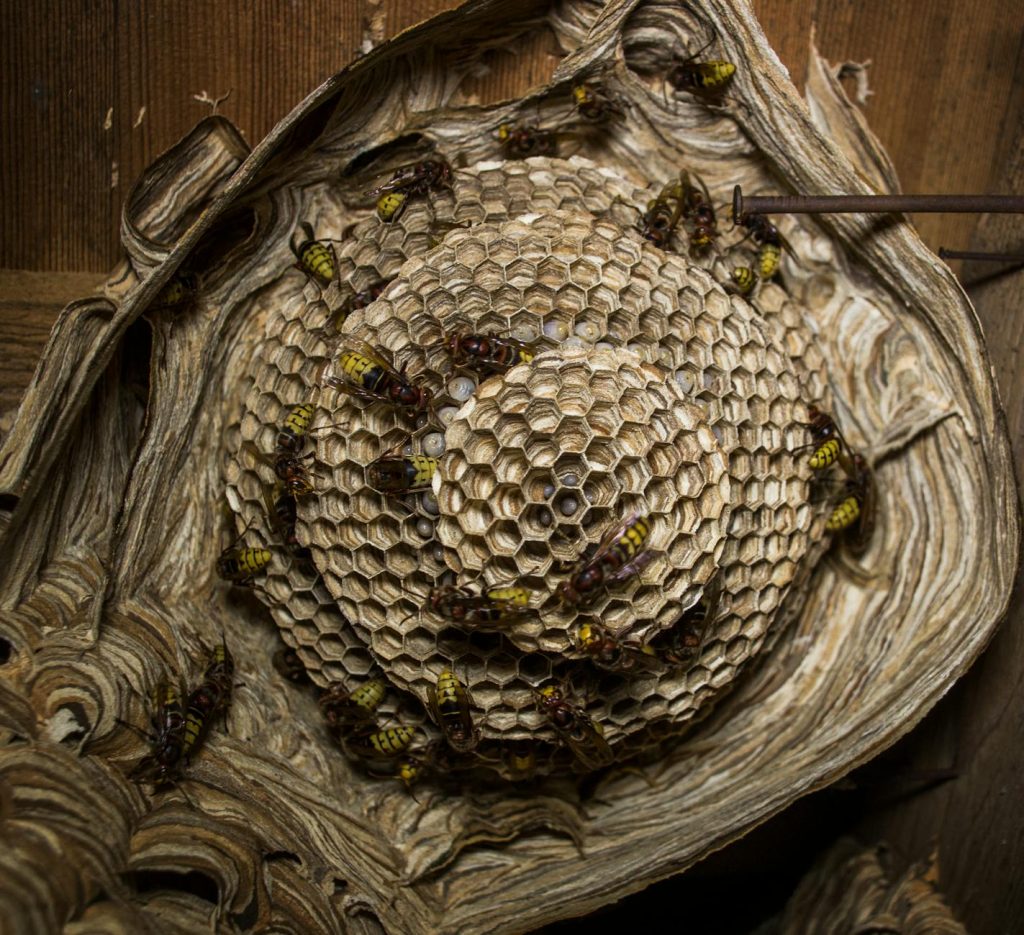
Can wasps damage drywall in Raleigh homes? Learn the signs to watch out for, risks involved, and when to call Sage Pest Control to avoid costly problems.
Key Takeaways About Wasp Damage to Drywall
- Wasps can build nests inside wall voids, and addressing the colony early helps you understand the scope before the situation gets worse. A professional review helps you understand the scope before it gets worse.
- Signs of wasp activity near your walls, such as wasps repeatedly entering or exiting a gap in siding, may point to a hidden colony worth investigating sooner rather than later.
- Proper nest removal and sealing of entry points around your home are the most practical steps to protect your walls and reduce the chance of a repeat problem.
- Yellow jackets and paper wasps are common species that may nest around homes, and identifying which species you’re dealing with guides the right approach.
How to Identify Wasp Damage to Drywall
Figuring out whether wasps are causing trouble behind your walls starts with knowing what to look for and where to look. Because wasp nests are built from scratch each year, fresh activity can appear in a spot that was completely clear the previous season. Catching the signs early helps you understand the scope of what you’re dealing with.
How to Tell Wasp Types Apart
Not every wasp nest you find near drywall is the same. Yellowjacket and paper wasp nests are the types most likely to concern homeowners. According to the University of Minnesota Extension, each nest is built from scratch each year, and previous nests are not reused, with the exception of European paper wasp nests. That means a nest you spot this season is a current, active structure rather than a leftover from last year.
Knowing whether you’re looking at a yellowjacket nest or a paper wasp nest matters because nest size, shape, and location can differ. If you notice a wasp nest near a wall void or ceiling line, pay attention to the wasps entering and leaving so you can describe what you see to a service professional.
How to Spot Wasp Activity Inside Your Home
A wasp nest that stays active can remain so until freezing temperatures arrive. According to the University of Minnesota Extension, a nest stays active until temperatures drop into the mid-to-upper 20s °F, at which point the old queen and workers die off. Until that happens, wasps may be present for months.
Inside your home, you might notice a faint buzzing or scratching sound coming from a wall or ceiling. Seeing individual wasps appear indoors, especially in the same room more than once, is another sign that a nest may be nearby. These observations warrant a closer look from a professional who can assess the situation.
Where Wasp Activity Shows Up Around Homes
Wasps tend to build nests in sheltered spots. Around a home, that can include eaves, soffits, and overhangs. When a wasp nest is positioned near or within a wall void, the activity may become noticeable from inside. Keep an eye on areas where you see wasps gathering or flying in a direct path toward a specific part of your exterior wall.
Exterior Entry Points Wasps Use
Wasps enter wall spaces through small gaps and openings on the outside of your home. Cracks around trim, gaps where utility connections meet siding, and openings along the roofline are all potential access points. A steady stream of wasps flying toward the same spot on your exterior is one of the clearest signs of a nest tucked behind the surface.
If you see this kind of focused traffic pattern, it’s worth having a service professional take a look. Because each wasp nest is a new build rather than a reused structure, the presence of active wasps at an entry point confirms current activity, not an old leftover.
Why Wasp Drywall Problems Develop
Wasps and drywall issues share a simple connection: shelter. When wasps find a protected void near your home, they build papery nests that grow throughout the season. The longer a colony stays hidden inside a wall, the more biological material (nest paper, dead insects, and debris) accumulates in the surrounding void. Understanding what draws wasps close to your home is the first step toward keeping them out of it.
Outdoor Nesting Areas for Wasps
Paper nest wasps start small. In spring, a single female finds a sheltered location and builds a nest of only a few cells where she cares for young. As the season progresses, female workers expand the papery nest. According to Kansas State University Extension, the colony grows throughout the season as workers add cells and provide food. By late summer, a nest that started under a soffit or inside a wall void can be considerably larger than it was in spring.
Staying alert for wasp nests around your home is important because early nests are far easier to address than mature colonies.
Food and Shelter That Attract Wasps
Wall voids offer wasps the protected, enclosed space they prefer. Moisture inside walls can compound the issue. According to the University of Minnesota Extension, most new homes have excess water in the wood and drywall, and that dampness can attract other pests as well. For wasps, a quiet, protected cavity can make a wall an appealing nesting site.
When wasps nest away from where people live or work, they can actually be considered beneficial, and controls may not be needed. The concern grows when they choose a spot inside or directly against your home’s walls.
How Wasps Move Around Homes
Social wasps sting to defend their colony, and some yellow jacket species can become more aggressive during late summer and fall. That seasonal shift is often when homeowners first notice wasps entering and exiting a gap in the siding or trim. Other wasp species, such as paper wasps, are generally less aggressive than yellowjackets but will still defend their nests if disturbed, and they can sting if provoked.
Old, abandoned nests left in place can also create secondary problems. According to UC IPM, old wasp nests can harbor infestations from other pests, so removing them is a worthwhile step even after the colony is gone.
Trails and Entry Points Wasps Use
Wasps typically enter wall voids through small openings in exterior trim, siding gaps, or areas where utility lines pass through the exterior. Once inside, they follow the void to build and expand. Preventive measures tend to be more effective when paired with proper nest management.
Being alert for nests around the home and addressing them early keeps colonies from settling deeper into wall spaces, where they become harder to reach and more likely to affect the surrounding drywall.
Risks From Wasp Damage to Drywall
Health Risks Linked to Wasps
The biggest risk when wasps nest near or inside drywall is stings. Yellow jackets, paper wasps, and bumble bees can all sting more than once because they pull their stinger out without injuring themselves, according to the University of Minnesota Extension. That means a single encounter near a wall void could result in multiple stings from one insect or several.
Bumble bees become aggressive when their nest is threatened. If a nest sits behind drywall and someone disturbs it through vibration or contact without realizing a nest is present, stings may follow. When the risk of stings is high and the area cannot be avoided, it may be necessary to treat the nest.
Property Damage From Wasps
Carpenter bees cause more concern than actual damage. Males display territorial behavior, loud buzzing, and “dive bombing” of anyone nearby. While unnerving, that behavior is no real threat. Female carpenter bees can sting, but do so only if provoked. The large holes females bore are often stained yellow or brown, which can affect the appearance of wood surfaces near your walls.
When wasp nests occur close to where people are active, the nests should be addressed to minimize the risk of stings. Nests tucked behind drywall are especially tricky because they may grow unnoticed until activity becomes obvious indoors.
Food Areas and Wasp Activity
Nests in areas with a lot of human activity create a nuisance. Bumblebee nests in yards, flower beds, wood piles, or walls near kitchens and dining spaces raise the risk of encounters during everyday routines. Paper wasp nests built in the wrong place, where they are likely to cause stings, should be addressed before the colony grows, as Mississippi State University Extension notes.
When to Look Closer at Wasp Activity
If you hear buzzing behind a wall, see wasps entering through a gap, or notice staining on drywall, it is worth a closer look. Nests near high-traffic spots in your home raise the risk of stings for everyone living there. Early attention helps you understand what you are dealing with before the nest grows larger and harder to reach.
Professional Pest Control for Wasp Drywall Damage
When you notice wasps near your walls or ceiling, it makes sense to wonder whether they could cause drywall damage. A professional review can help you understand what you are dealing with and whether the situation calls for action. Rather than guessing, working with a trained team gives you clarity on the scope of the issue.
How to Reduce Attractants for Wasps
Keeping wasps from becoming a recurring concern around your home starts with reducing what draws them in. Seal gaps and cracks along your roofline, soffits, and exterior walls where wasps may find entry points. Even small openings can give wasps access to wall cavities.
Keep outdoor trash bins tightly sealed and clean up fallen fruit or sugary residues from patios and decks. Maintaining your home’s exterior by addressing peeling paint, damaged siding, or deteriorating caulk helps close off potential nesting areas before wasps move in.
Why Wasp Control Starts With Inspection
An inspection is the first step toward understanding the situation. Wasps nesting inside wall voids are not always visible from the outside, and the signs can be subtle. A service professional can identify entry points, assess activity levels, and determine whether a nest is present behind drywall.
Skipping this step can mean misidentifying the pest or missing a nest entirely. An inspection also helps distinguish between a minor nuisance and something that may need a more involved approach. Sage Pest Control offers same-day service, so you do not have to wait to get answers.
What to Expect During Professional Wasp Treatment
During treatment, a service professional targets the nest and the entry points that wasps are using. The goal is to address the existing activity while reducing the likelihood of wasps returning to the same area. Sage Pest Control uses GreenPro-certified, EPA-standard treatments with environmentally friendly, low-impact products.
Treatment specifics vary depending on the nest location, the species involved, and how accessible the area is. Your technician will walk you through the plan before starting so you know what to expect. There are no surprises, just a clear explanation of the approach.
What to Expect From a Wasp Control Plan
A one-time treatment may resolve the immediate concern, but wasps can return seasonally. Sage Pest Control’s tri-annual program covers 50+ pest types, including wasps, and uses product rotation to help prevent resistance over time. This ongoing approach is designed for homeowners who want consistent attention to their home’s perimeter and entry points.
With 3,700+ Google reviews · 4.8★ average across Charlotte, Raleigh, Greensboro, and Virginia Beach, Sage is a local, family-owned company built around responsiveness. Same-day service is guaranteed, and text-first communication means you typically hear back in under one minute. That kind of speed matters when wasps are active near your living space.
Can Wasps Damage Drywall: Bottom Line
Wasps that nest near or within wall areas can cause concern for homeowners, but the broader issue is the sting risk that comes with an active nest in close proximity to your living space. If you notice wasps entering or exiting around your walls or ceilings, a professional review can help you understand what is happening and whether the nest needs to be addressed. Proactive attention to nests in problem areas is the simplest way to keep your home comfortable.
If you need help, reach out to Sage Pest Control for same-day service and a clear plan for your situation.
Frequently Asked Questions
Should I Be Worried About a Wasp Nest Near My Wall?
A nest close to where you and your family spend time raises the chance of an unwanted encounter. If you spot wasp activity around your walls, it is worth having a professional take a look so you know exactly what you are dealing with.
How Can I Tell If Wasps Are Nesting Inside a Wall?
Repeated wasp traffic around a specific spot on your exterior wall or a faint buzzing sound from inside can point to nesting activity. Avoid disturbing the area and let a service professional inspect it.
Can I Handle a Wall Nest on My Own?
Nests in hard-to-reach spots can be tricky, and some wasp species can sting more than once. A trained service professional can address the nest while reducing your risk of stings.
When Is the Best Time to Address a Wasp Nest?
Addressing nests early, before they grow larger, is generally the most straightforward approach. Staying alert for wasp activity around your home and acting sooner rather than later helps keep things manageable.
