
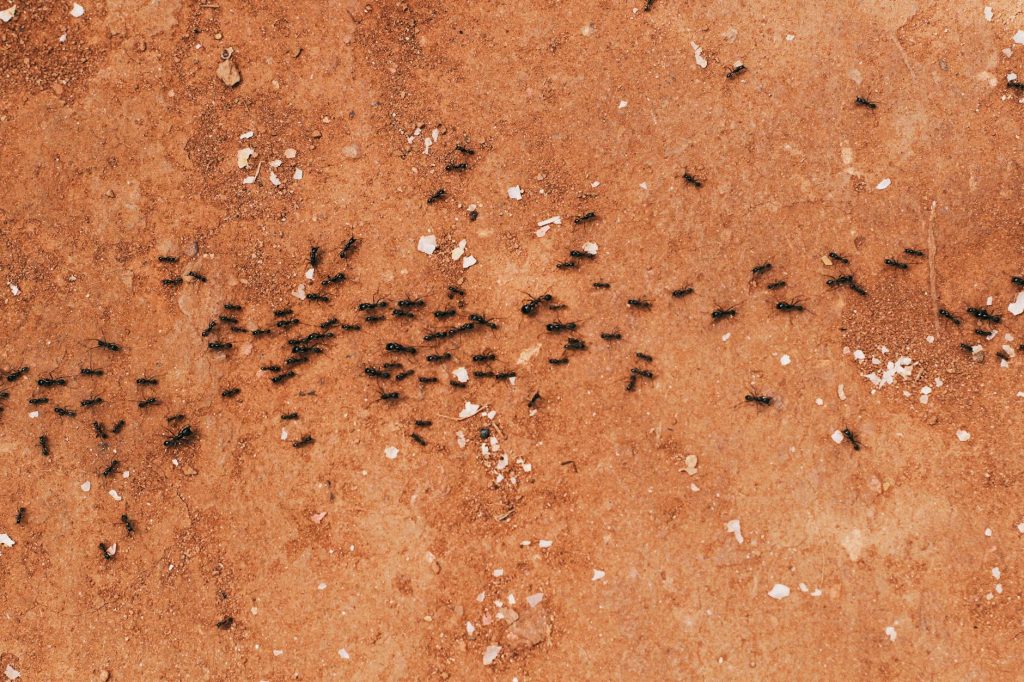
Ants in bathrooms can cause costly problems when signs are missed. Learn the risks, how to get rid of ants in bathroom, and when to call Sage Pest Control.
Key Takeaways About Getting Rid of Ants in Your Bathroom
- Ants in your bathroom are often drawn indoors searching for water or food, so reducing moisture and sealing entry points around pipes and windows are your first practical steps.
- Identifying the type of ant matters because some species nest inside walls or voids, while others nest outdoors and simply forage through your home.
- DIY cleanup can remove visible ants, but getting rid of bathroom ants long-term usually means finding and addressing the colony itself.
- A professional inspection can pinpoint nest locations and moisture issues that keep attracting ants back to the same spots.
How to Identify Ants in Your Bathroom
Before you can address ants in your bathroom, you need to know what species you’re dealing with and where they’re nesting. Different ant species behave differently, and a quick visual check can tell you a lot about what’s going on behind your walls or under your vanity.
How to Tell Ant Types Apart in Your Bathroom
Carpenter ants are among the larger species you may find in a bathroom. Unlike termites, carpenter ants don’t consume wood. Instead, they prefer existing voids in doors, window frames, and walls rather than excavating large cavities. If you’re seeing large, dark-bodied ants near moisture-prone areas, carpenter ants are worth considering. Smaller ant species may also trail through bathrooms, so size and color are your first clues.
How to Spot Ant Activity Inside Your Bathroom
Locating a nest indoors is often challenging because nests are hidden and not easily discovered. According to the University of Minnesota Extension, careful observations of worker ants can help you find the nest. Watch for worker ant movement between sunset and midnight during spring and summer months, as this is when many species are most active.
Some species may have more than one nest within a structure. Carpenter ants, for example, can maintain satellite colonies apart from the main nest. This means a single trail of ants in your bathroom could be connected to a larger network elsewhere in your home.
Where Ant Activity Shows Up Around Bathroom Areas
Carpenter ants build nests indoors within intact, dry wood or water-damaged wood, as well as insulation, crawl spaces, and attic spaces. Bathrooms often have the moisture conditions that can attract nest-building activity. According to Oregon State University Solve Pest Problems, these ants also nest outdoors in tree stumps, firewood, fence posts, and wooden retaining walls, so indoor activity may trace back to an outdoor colony.
Exterior Entry Points Ants Use Around Your Bathroom
Ant colonies are mobile and can move to new locations when disturbed. If you treat one area without addressing the full picture, the colony may relocate. Gaps around exterior plumbing lines, window frames, and door frames are common paths ants use to move between outdoor nests and indoor spaces.
Because some species maintain multiple nests, tracing a bathroom ant trail back to a single entry point isn’t always straightforward. Watching where ants travel along your home’s exterior walls can help narrow down how they’re getting inside.
Why Ant Problems Develop in Bathrooms
Bathrooms offer exactly what foraging ants are looking for: water, shelter, and a quiet path inside your walls. Understanding why ant problems develop in the bathroom helps you target the right areas instead of chasing individual ants around the sink.
Outdoor Nesting Areas for Ants Near Your Bathroom
Most often, ants are located outdoors, and foragers enter your home in search of water or food. According to Kansas State University Extension, houses near wooded areas are particularly vulnerable to invasion. An outdoor colony may send workers through gaps near bathroom plumbing without ever establishing a nest inside your walls.
Some species commonly nest indoors, while others nest outside and enter a home just to look for food. When you spot ants in your bathroom, the colony itself could be yards away in a tree stump, landscape timber, or soil bed.
Food and Shelter That Attract Ants to Your Bathroom
Foraging worker ants leave the nest and seek foods such as insects, decaying fruit, and honeydew. Bathrooms may not seem like a food source, but consistent moisture is a strong draw on its own. Carpenter ant workers do not eat wood but excavate smooth galleries in wood to raise their young, so damp framing near showers or tubs can become nesting habitat.
Piles of coarse sawdust or splintered wood near bathroom walls can indicate a carpenter ant nest nearby. If you notice fine debris collecting along baseboards, take a closer look.
How Ants Move Around Your Bathroom
Ants follow reliable routes between the colony and a resource. Foraging workers that find water or food in your bathroom return to the nest and bring back more ants. That is why a few ants on your vanity one morning can turn into a steady line by the next day.
Trim branches away from your home’s structure to reduce the bridges ants use to reach your roof and exterior walls. Sealing possible entry points such as doors, windows, and areas where pipes and wires enter the structure limits indoor access.
Ant Trails and Entry Points Around Bathroom Homes
Watch for foraging ants along baseboards, tile edges, and around plumbing fixtures. Wipe them up with soapy water and a sponge to remove the scent trails before they return to the nest. Disrupting those trails early can slow the stream of workers heading into your bathroom.
Keep in mind that to rid your home of ants you must address the colonies or nests, not just the visible foragers. Treatments applied only to ant trails may kill a few foraging workers but do not address the source of the problem.
Risks From Ants in Your Bathroom
Seeing a few ants near your shower drain or under the vanity might seem like a minor nuisance, but certain pests can create real problems if they go unchecked. Understanding what is actually at stake helps you decide how urgently to act when ants show up in your bathroom.
Health Risks Linked to Bathroom Ants
The selected evidence for this section focuses on structural concerns rather than direct health threats. That said, any pests moving through damp bathroom spaces can be unpleasant to share a room with, especially when numbers grow. Addressing ant activity early keeps your bathroom a more comfortable space for your household.
Property Damage From Ants in Your Bathroom
Carpenter ants are the pests most likely to cause property damage in and around bathrooms. According to Kansas State University Extension, they usually start building nests in soft wood but may excavate into perfectly sound, dry lumber in areas such as porch columns, roofs, window sills, and hollow core doors. They do not eat wood the way termites do. Instead, they excavate smooth galleries inside the wood to rear their young.
Those galleries usually follow the grain of the wood and go around the annual rings, with clean, smooth tunnel walls. According to Texas A&M AgriLife Extension, galleries can weaken structural timbers over time. Bathrooms often have moisture-exposed wood framing, which can make them attractive starting points for these pests.
Food Areas and Ant Activity in Your Bathroom
While bathrooms are not typical food-storage areas, pests that establish nests nearby may move through other parts of your home as well. Carpenter ants that begin nesting in bathroom wall voids or damp wood can extend their galleries into adjoining structural timbers. The longer these pests remain, the more wood they may excavate.
When to Look Closer at Ant Activity in Your Bathroom
Search for piles of sawdust-like wood scrapings and dead ant parts underneath exit holes to locate nests. If you notice fine debris collecting near your baseboards, cabinets, or window frames in the bathroom, it is worth investigating further. These signs point to active gallery construction by pests inside the wood.
Because carpenter ants may move from soft, moisture-damaged wood into sound lumber, early detection matters. Catching these pests before galleries spread through structural timbers gives you more options and avoids larger repair work down the road.
Professional Pest Control for Ants in Bathroom
When ants keep showing up in your bathroom despite your best efforts, the issue often traces back to moisture, hidden nests, or both. Understanding how to reduce what draws them in, where to look, and what a professional ant infestation treatment involves can help you move past the frustration.
How to Reduce Attractants in Bathroom
Bathrooms provide the steady moisture ants need. According to the University of Tennessee Extension, wood kept at low moisture levels (10 to 12 percent) is less susceptible to carpenter ant infestation. That means controlling humidity in your bathroom matters. Fix leaky faucets, repair dripping pipes under the vanity, and run your exhaust fan during and after showers to keep surfaces dry.
If floor joists or subflooring beneath the bathroom stay wet with condensation, that damp wood becomes a target. Replacing damaged or decayed wood and addressing moisture problems are key parts of long-term ant control.
Why Ant Control in Your Bathroom Starts With Inspection
Ants you spot along the sink or tub edge are usually foragers traveling from a nest hidden somewhere else. According to Mississippi State University Extension, nests in homes may be in floor or wall voids, fascia board or soffit voids, and similar locations. A bathroom wall void with plumbing access can be an ideal nesting site.
Carpenter ants inhabit various spaces including solid wood, hollow doors, window frames, walls, and insulation. Without finding the nest, surface-level cleanup only addresses what you can see. That is why a professional inspection—targeting wall voids, plumbing access points, and moisture-damaged framing—is the first real step toward resolving a bathroom ant infestation.
What to Expect During Professional Ant Treatment in Your Bathroom
According to the University of Minnesota Extension, the best approach to controlling carpenter ants is to locate and destroy the nest, replace damaged or decayed wood, and address any moisture problems. A service professional focuses on tracing ant activity back to the source rather than treating only the visible trail.
Addressing a carpenter ant infestation requires locating and treating nests. Because these ants can nest in walls, insulation, and cardboard, a trained eye helps narrow down where activity is concentrated. At Sage Pest Control, our service professionals handle 50-plus pest types and use GreenPro-certified, low-impact products applied to EPA standards.
What to Expect From a Bathroom Ant Control Plan
A one-time visit may knock down visible activity, but ant infestation problems can return if conditions stay the same. Sage Pest Control’s tri-annual program includes product rotation to help prevent resistance, so your home gets ongoing attention across seasons rather than a single treatment.
With same-day service guaranteed and sub-one-minute text response times, getting started does not require a long wait. Our team serves Charlotte, Raleigh, Greensboro, and Virginia Beach, and we are happy to walk you through what we find during your inspection so you know exactly what is going on behind those bathroom walls.
How to Get Rid of Ants in Bathroom: Bottom Line
Bathroom ants follow moisture and food traces, so fixing leaks, wiping down surfaces, and sealing gaps around pipes are your most practical first moves. Cleaning up foraging ants early can help limit the number returning to your bathroom. When ants keep coming back or you suspect a hidden nest, a professional inspection gives you a clearer picture of what you’re dealing with. Sage Pest Control offers same-day service across Charlotte, Raleigh, Greensboro, and Virginia Beach, so reach out whenever you need a hand tracking down the source.
Frequently Asked Questions
Why Do Ants Keep Appearing in My Bathroom?
Bathrooms provide the moisture that many ant species need. Condensation around fixtures, slow drains, and standing water can all draw foraging ants indoors. Reducing excess moisture is one of the most straightforward ways to make the space less appealing.
Can I Handle a Bathroom Ant Problem on My Own?
Basic steps like wiping up visible ants with soapy water, sealing entry points, and keeping surfaces dry can help. However, ant colonies may be mobile and can relocate when disturbed, which sometimes makes DIY efforts temporary rather than lasting.
How Do I Know If the Nest Is Inside My Home?
Consistent ant activity in the same area, especially at night, can suggest a nest nearby. Locating hidden nests is often challenging without professional help, since they may be tucked inside walls or other concealed spaces.
When Should I Call a Professional?
If you notice ants returning after repeated cleanup, or if you see large ants that may indicate a carpenter ant issue, professional assistance can help you find and address the nest directly. Some species maintain more than one nest, which can make full-colony treatment difficult without trained support.
