
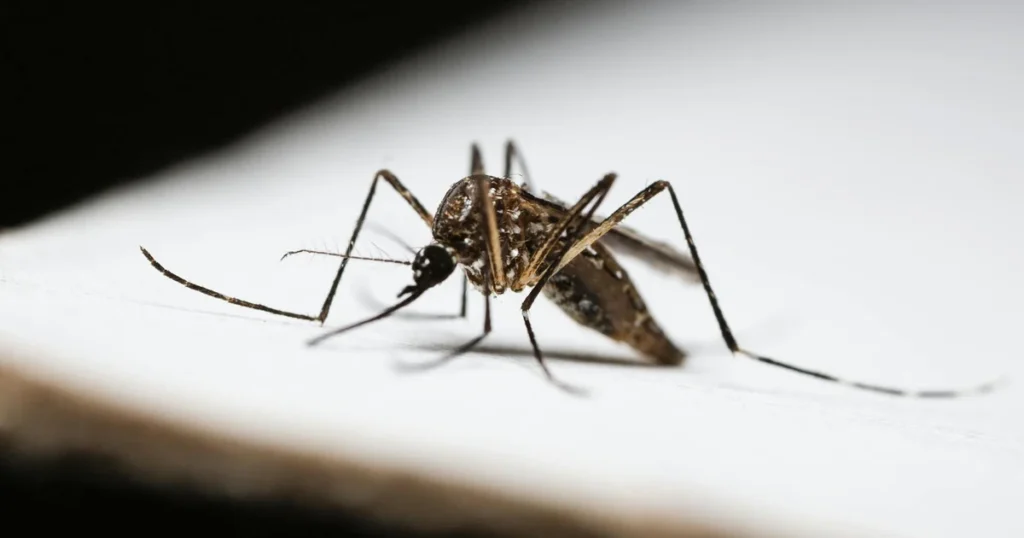
Mosquitoes in North Carolina are active from early spring through late fall, with peak pressure hitting between May or June and October across Charlotte, Raleigh, Greensboro, and the coast. The warm, humid climate and abundant standing water make NC one of the most hospitable states in the country for mosquito breeding. If your yard has dense shrubs, shaded vegetation, or any spot that holds water, mosquitoes are almost certainly using it.
Key Takeaways
- The Asian tiger mosquito is the most common species NC homeowners encounter and bites aggressively during the day.
- West Nile virus, eastern equine encephalitis, and La Crosse encephalitis are all documented in North Carolina.
- Mosquitoes breed in as little as a bottle cap of standing water, so yard conditions drive infestation pressure more than geography.
- Professional mosquito treatments target foliage and harborage areas where mosquitoes rest, not just open air.
- Recurring scheduled treatments throughout mosquito season produce better results than a single application.
Types of Mosquitoes Found in North Carolina Yards
Three species account for most of the mosquito pressure NC homeowners experience: the Asian tiger mosquito, the northern house mosquito, and eastern saltmarsh mosquitoes along the coast. Each species has distinct habits that affect when and where they bite, which matters when you are trying to protect your family outdoors.
Asian Tiger Mosquito in North Carolina Homes
The Asian tiger mosquito (Aedes albopictus) is the dominant container-breeding mosquito species in NC. A statewide surveillance study published in the Journal of Medical Entomology found that Ae. albopictus made up 81% of more than 67,000 specimens collected across 18 counties. You can identify it by its black body with white stripes running down the back and legs. Unlike most mosquitoes, the Asian tiger mosquito bites during daylight hours, including early morning and dusk. It breeds in small containers — buckets, bird baths, outdoor flower pots, old tires, and even tree holes. Research published in the Journal of the American Mosquito Control Association confirmed that Ae. albopictus has been reported in all 100 North Carolina counties.
Northern House Mosquitoes in North Carolina
The northern house mosquito (Culex pipiens) is the primary carrier of West Nile virus in NC. Unlike the Asian tiger mosquito, it is most active at night, feeding on birds and humans. It breeds in stagnant water with high organic content, including clogged gutters, neglected bird baths, and drainage ditches. If you notice mosquito bites appearing overnight, this species is the likely culprit.
Eastern Saltmarsh Mosquitoes in NC Coastal Areas
Eastern saltmarsh mosquitoes are a primary nuisance pest along the North Carolina coast and tidal areas. They breed in saltmarsh environments and can travel several miles from their breeding sites, which means homeowners far from the water can still experience pressure from this species. They are aggressive biters and can appear in very high numbers after tidal flooding events.
Mosquito-Borne Diseases Active in North Carolina
North Carolina mosquitoes carry several diseases that pose real health risks to humans and pets. This is not a distant concern. West Nile virus, eastern equine encephalitis, and La Crosse encephalitis all circulate in NC, and each one has caused serious illness and deaths within the state.
West Nile Virus and Zika Virus Risk in NC
West Nile virus is the leading mosquito-borne disease threat across North Carolina. According to CDC surveillance data published in the Morbidity and Mortality Weekly Report, West Nile virus accounts for the majority of nationally notifiable arboviral disease cases in the United States. Most people who contract WNV show no symptoms, but roughly 1 in 150 develop serious neurological illness. Zika virus has also been documented in NC through travel-associated cases, though local transmission remains rare.
La Crosse Encephalitis and Eastern Equine Encephalitis in NC
La Crosse encephalitis is endemic in western North Carolina, where it poses the greatest risk to children under 16. As documented in the North Carolina Medical Journal, La Crosse virus and West Nile virus together account for the vast majority of arboviral disease cases in the state. Eastern equine encephalitis (EEEV) is rarer but carries a significantly higher fatality rate and has been confirmed in NC. Yellow fever and malaria are not locally transmitted in NC today, though both diseases have historical ties to the region and the same mosquito species remain present.
When North Carolina Mosquito Season Peaks by Region
Mosquito season in North Carolina runs from early spring through the first hard frost, which arrives later in the southern and coastal parts of the state. In Charlotte and Raleigh, activity typically builds as early as February or March and mostly finish by early May, reaches peak pressure from July through August, and tapers off in October. In Greensboro and the Piedmont, the season follows a similar arc. Along the coast near the Outer Banks and Virginia Beach, the warm, humid environments extend mosquito season deeper into fall, with some years seeing active populations through November.
What Drives Early Summer Mosquito Activity in NC
Warm temperatures above 50 °F trigger mosquito eggs that overwintered in standing water to hatch. Early spring rain creates the standing water those eggs need. Homeowners who address standing water and dense vegetation before July get ahead of the first generation before populations have a chance to establish. Waiting until you are already getting bitten means the breeding cycle is already underway.
What Attracts Mosquitoes to Your North Carolina Yard
Mosquitoes need two things to thrive on your property: standing water to breed and shaded foliage to rest. Even a small amount of water, less than an inch in a container, is enough for mosquitoes to lay eggs and complete their larval cycle. Most homeowners underestimate how many breeding sites they have until a technician walks the property.
Common Mosquito Breeding Grounds Around NC Homes
Standing water in containers is the single most controllable breeding site on most North Carolina properties. Common sources include clogged gutters, bird baths, old tires, buckets, outdoor flower pots, potted plant saucers, and low spots in the yard that collect rainwater. Tree holes and natural bodies of water like drainage ditches and ornamental ponds also serve as breeding grounds. Mosquito larvae need still water to develop, so anything that holds water and sits undisturbed for more than a few days is a potential breeding site.
How Shaded Vegetation Creates Mosquito Harborage in NC
Adult mosquitoes spend most of the day resting on the underside of leaves in shaded, humid environments. Dense shrubs, undergrowth, and overgrown landscaping around patios, decks, and fences create ideal harborage conditions. This is why treating open air does little to reduce mosquito populations: the mosquitoes are not flying around waiting to be contacted. They are resting in vegetation, which is where professional treatment needs to reach them.
How Professional Mosquito Control in North Carolina Works
Professional mosquito control targets the places mosquitoes actually live, not just the areas you walk through. Sage Pest Control’s process begins with a detailed property inspection to identify harborage areas and breeding conditions before any treatment is applied. This is where most of the useful information comes from: where water pools, where vegetation is densest, and which conditions are driving mosquito pressure on your specific yard.
North Carolina’s Sage Pest Control Targeted Mosquito Treatment Process
Technicians apply treatment using professional mist blower equipment directly to trees, shrubs, undergrowth, and shaded foliage. Because mosquitoes rest on the underside of leaves, treating foliage is the most effective way to reach active adult populations. Treatment also covers harborage areas around patios, decks, and fences where mosquitoes hide during the day. Most treatments take 20 to 30 minutes depending on property size and the amount of landscaping to cover.
EPA-registered products are selected based on property conditions and applied in a targeted manner. Because they are applied directly to harborage areas, they can continue to reduce mosquito activity even after normal rainfall. Heavy rain or severe weather can reduce effectiveness, which is why Sage schedules mosquito control on a recurring basis throughout mosquito season rather than as a one-time service.
North Carolina Recurring Mosquito Treatments Outperform Single Applications
A single mosquito treatment controls the active adult population at the time of service, but it does not address eggs already in standing water or mosquitoes that move in from neighboring properties. NC State Extension Entomology recognizes recurring treatment programs as the most practical approach to sustained mosquito management in residential settings. Sage’s recurring schedule ensures that as new generations of mosquitoes emerge throughout the season, they encounter treated vegetation before they reach your patio. If you notice mosquito activity between scheduled visits, Sage will return and re-treat at no additional cost.
Steps to Reduce Mosquitoes Around Your NC Home
Professional treatment works best when paired with property-level changes that reduce breeding sites and harborage. These are steps any homeowner can take between scheduled service visits to make the yard less hospitable to mosquitoes.
- Empty and scrub bird baths, buckets, and outdoor containers at least once a week.
- Clean gutters regularly so water does not pool and stagnate.
- Drain or fill low spots in the yard that collect standing water after rain.
- Trim dense shrubs and undergrowth to reduce shaded resting areas near the home.
- Change water in potted plant saucers weekly and remove old tires from the property.
- Use insect repellents with DEET or picaridin when spending time outdoors at dusk and early morning.
- Keep screen doors and windows in good repair to protect indoor spaces.
Frequently Asked Questions
When does mosquito season start in North Carolina?
Mosquito season in North Carolina typically begins in early spring, around July, when temperatures consistently exceed 50 °F and spring rainfall creates standing water. Activity peaks from July through August and tapers off after the first cold front of fall, usually in October for inland areas and later along the coast.
What is the most common mosquito species in NC?
The Asian tiger mosquito is the most common species NC homeowners encounter. A statewide survey found it represented 81% of container-breeding mosquito specimens collected across 18 counties. It bites during the day, breeds in small containers, and has been documented in all 100 North Carolina counties.
Can mosquitoes in North Carolina make you sick?
Yes. North Carolina mosquitoes carry West Nile virus, eastern equine encephalitis, La Crosse encephalitis, and have been associated with Zika virus through travel-related cases. La Crosse encephalitis is particularly active in western NC and poses the highest risk to children. Most infections are mild, but serious neurological illness is possible with each of these diseases.
How long does a mosquito treatment take?
Most professional mosquito treatments take approximately 20 to 30 minutes, depending on the size of your property and the amount of landscaping and foliage that needs to be covered. Your technician will inspect the yard first to identify harborage and breeding areas before applying treatment.
Does rain wash away mosquito treatments?
Normal rainfall does not typically wash away the treatment, because products are applied directly to foliage and harborage areas rather than to open surfaces. Heavy rain or severe weather can reduce effectiveness over time, which is why recurring scheduled treatments throughout mosquito season produce more consistent results than a single application.
