
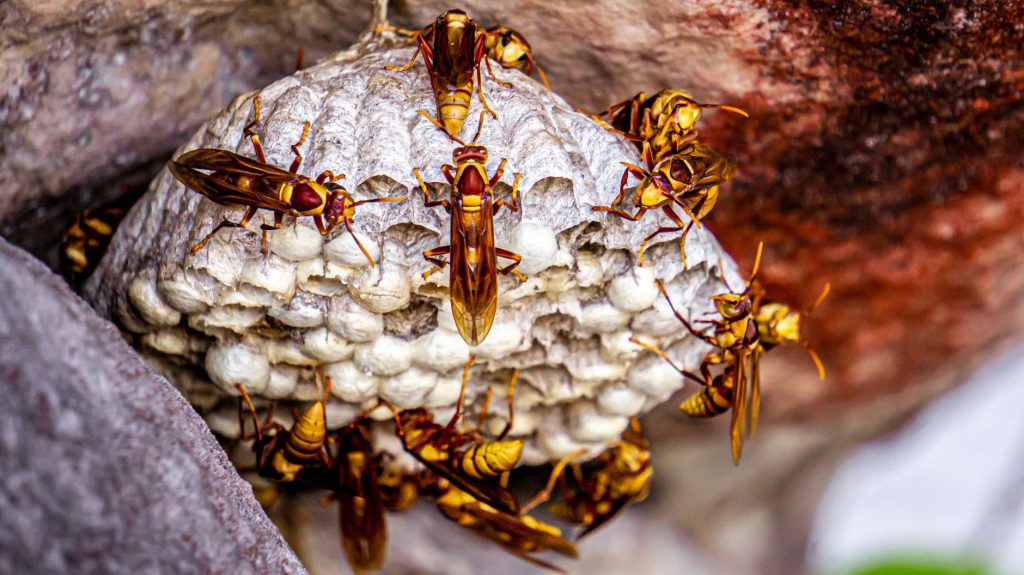
Learn what smells attract wasps around Charlotte homes, why certain scents draw them closer to homes, the signs, risks, and when to call Sage Pest Control.
Key Takeaways About Smells That Attract Wasps
- Wasps can be drawn to sweet scents from sugary foods, ripened fruit, and flower nectar around your home.
- Food odors, moisture, and warmth may all pull wasps closer to outdoor living spaces, so managing those attractants is a practical first step.
- Understanding which smells wasps respond to helps you reduce the conditions that bring them near your yard and doorways.
- When wasp activity increases despite your prevention efforts, a professional assessment can help identify what is drawing them in and how to address it.
How to Identify the Smells That Attract Wasps
Understanding what smells attract wasps starts with knowing which types you’re dealing with and where they tend to show up. Different wasps respond to different food odors, and their nesting habits can tell you a lot about why they keep returning to certain spots around your home.
How to Tell Different Wasp-Attracting Smells Apart
Paper wasps feed on fruit, nectar, pollen, and insects. They tend to be less bothersome than yellowjackets around outdoor meals. Yellowjackets, on the other hand, are more drawn to the kinds of food and sweet smells you’ll find at a picnic. Bumble bees are social and nest in the ground, and they can become aggressive when their nest is threatened.
Knowing which species you’re seeing helps you figure out which odors are pulling them in. Fruit on a counter may draw paper wasps, while food and sweet smells common at a picnic can catch a yellowjacket’s attention.
How to Spot Wasp Activity Inside Your Home
According to the University of Tennessee Extension, pests are attracted by light, warm air, moisture, and food. Odors from a dead bird, rodent, dead insects, or a nest in a wall can also draw them inside. Even a soured mop or spilled materials may be enough to catch their interest.
Once inside, wasps seek protection and shelter in dark cavities in walls or crawl spaces. If you notice wasps lingering near a particular wall or ceiling area, there may be an odor source behind the surface that you can’t see.
Where Wasp-Attracting Smells Show Up Around Homes
Around buildings, wasp nests are often built under eaves and in other protected areas. In natural settings, nests may be built over water or in thick shrubbery. Paper wasp nests last only one season, so a nest from last year won’t be reused, but the same sheltered spot may attract new nest-building if food odors remain nearby.
Bumblebee nests sit at ground level, so keep an eye on garden beds and low landscaping where floral scents are strongest.
Exterior Entry Points Wasps Use to Follow Scents
Wasps follow scent trails toward food and shelter. Gaps near eaves, roofline edges, and wall cavities are common entry points, especially when warm air and food odors drift outward. Spilled drinks, overripe fruit near doorways, or uncovered trash bins can create a scent path that leads wasps right to an opening.
Treating yellowjacket nests near these entry points is dangerous. As the University of Georgia pest guide notes, a mistake during yellowjacket nest treatment can result in hospitalization or death from excessive stings. Leave nest removal near high-traffic entry points to trained service professionals.
Why Wasp Attraction Problems Develop
Wasps follow their noses to food, and your yard can offer plenty of it without you realizing. Understanding the food sources and conditions that draw wasps closer to your home helps you see why activity tends to build over time rather than resolve on its own.
Outdoor Nesting Areas That Produce Wasp-Attracting Smells
Pollen-producing plants can serve as a food source for adult wasps, and according to UF/IFAS Extension, these plants may promote the establishment of wasps in nearby habitats. Gardens, flower beds, and landscaped areas near your home can create a welcoming environment without you realizing it that encourages wasps to set up and stay close.
Food and Shelter Sources That Attract Wasps
Wasps and ants both use honeydew, the sticky residue left by plant-feeding insects, as a food source. This sweet substance can draw wasps to trees, shrubs, and structures where honeydew accumulates. When food is available and left undisturbed, more insects arrive, and the longer the situation persists, the harder it becomes to manage.
Identifying what the insects are attracted to and removing that food source is a practical first step.
How Wasps Follow Scents Around Homes
Wasps forage outward from their nesting sites, following scent cues toward food. When a food source is consistent, foraging paths become established routes between the nest and your living spaces. Remove this sentence or replace with a supported claim about wasp foraging behavior, such as noting that wasps forage outward from nests toward available food sources.
Trails and Entry Points Wasps Use to Follow Scents
Wasps use scent cues to locate food sources and can return to the same spot once they find a reliable supply. Consistent wasp traffic near your home increases the chance of stings during everyday outdoor activity. Wasps may follow similar scent-based paths along eaves, fence lines, or garden edges, returning to the same food source once they locate it.
Removing or masking the food source disrupts the pattern. Keeping food sources cleaned up around your home is one of the most straightforward ways to reduce wasp activity near your living areas.
Risks From Wasp-Attracting Smells
When wasps follow a scent to your property, they do more than cause a brief scare. The smells that draw them in can concentrate activity around areas where you spend time, raising the chance of stings and creating ongoing nuisance problems worth understanding.
Health Risks Linked to Wasp Infestations
A wasp that picks up on a smell may land on your skin to investigate the scent or to collect moisture if you are sweating heavily. According to UC IPM, if you remain calm in this situation, the insect will eventually leave on its own. Swatting or panicking, however, can provoke a sting. Knowing that scent-driven landings are typically investigatory helps you respond in a way that lowers your risk.
Property Damage From Wasp Infestations
Not every stinging insect drawn by scent limits its impact to nuisance visits. Carpenter bees, for example, may investigate wood surfaces and then bore into them. According to the University of Georgia pest guide, cedar boards are particularly susceptible to extensive damage from carpenter bees. Over time, repeated nesting can weaken exterior trim, fascia, and decking.
Mud daubers attracted to sheltered areas of your home build 4- to 6-inch long vertical mud tubes on walls, each housing individual larvae and spider prey. These nests can accumulate on eaves, porch ceilings, and garage walls, leaving staining and requiring removal.
Food Areas and Scents That Draw Wasp Activity
Outdoor dining areas, grills, and open drinks produce the kinds of smells that pull wasps in close to people. Once wasps associate a spot with a food-related scent, they may return. This pattern turns patios and decks into areas where stings become more likely, especially during meals or gatherings.
When to Look Closer at Wasp Activity
If you notice wasps investigating the same spots on a regular basis around your home, it is worth checking for nearby nesting activity. Mud tubes on walls or bore holes in wood trim can signal that scent-attracted visits have turned into an established presence. Early awareness gives you more options before nests grow larger or structural wear adds up.
Professional Pest Control for Wasp Problems
Understanding what smells attract wasps is one thing. Acting on that knowledge to keep them away from your home is where a professional approach matters. Sage Pest Control uses a tri-annual program with product rotation to help prevent resistance, and our GreenPro-certified, EPA-standard treatments are designed to be low-impact and environmentally friendly.
How to Reduce Scents That Attract Wasps
One of the simplest steps you can take is managing outdoor food sources. If pet food bowls are drawing wasps, limit the time you let pets eat before removing the food rather than leaving bowls out all day. Mississippi State University Extension recommends this approach for managing ants attracted to pet food, and the same principle applies to reducing wasp attractants. That small change can cut down on the scent signals that pull wasps toward your patio or porch.
Lure traps offer another option. According to Oregon State University Solve Pest Problems, lure traps use a smell that attracts insects to enter a trap they can’t exit, and they don’t rely on insecticides. Placing these traps around gathering areas can help intercept wasps before they become a nuisance near your home.
Why Wasp Control Starts With an Inspection
Finding where wasps are nesting is the first priority in any control plan. When a nest isn’t visible, the situation calls for a different strategy. If you can’t find the nest, a pest control professional may be able to use bait stations or other targeted methods to locate and address the colony.
Sage Pest Control’s service professionals know where to look and what to look for. With same-day service guaranteed and sub-one-minute text response times, you won’t be left wondering what to do next while wasps keep showing up.
What to Expect During Professional Wasp Treatment
Not every wasp requires the same response. Cicada killers are active for only about two to three weeks per year and are not aggressive toward people. Knowing which species you’re dealing with helps determine the right approach and avoids unnecessary treatment.
For wasps that do need attention, your Sage technician will identify the source of the problem, locate nests when possible, and apply targeted treatments. Our product rotation across tri-annual visits helps keep treatments working over time rather than losing their impact.
What to Expect From a Wasp Control Plan
A wasp control plan from Sage Pest Control starts with understanding the attractants around your property, from food odors to other scent sources, and then builds a strategy around those findings. The tri-annual schedule means your home gets attention throughout the seasons, not just when wasps are most active.
Sage is a local, family-owned company with 3,700+ Google reviews · 4.8★ average across our Charlotte, Raleigh, Greensboro, and Virginia Beach service areas. Our team treats your home like our own, and we back every visit with the kind of follow-through that keeps you comfortable year-round.
What Smells Attract Wasps: Bottom Line
Wasps respond to a range of scents, from sweet odors like flower nectar and fruit to protein-rich food smells. Reducing access to those attractants around your yard and outdoor dining areas is one of the simplest ways to lower wasp activity near your home. When nests do appear, addressing them early matters, since some species can become aggressive when disturbed. If you are dealing with wasps around your property, Sage Pest Control offers same-day service and can help you figure out the best next step.
Frequently Asked Questions
Do Wasps Come Back to the Same Nest Every Year?
Paper wasp nests last only one season. A new colony may build in the same general area the following year if the location still offers shelter, but the original nest is not reused by a surviving colony.
Can Wasp Nests Be Treated Safely Without Professional Help?
Some smaller, visible nests can be managed with store-bought sprays designed for close-range application. However, treating yellowjacket nests without proper training can result in a dangerous number of stings. When in doubt, calling a professional is the safer choice.
Why Are Wasps Attracted to My Outdoor Meals?
Wasps are drawn to sugar sources such as fruit and sweet drinks, as well as protein-based foods. Covering dishes, cleaning spills right away, and removing food when you finish eating can help keep them from lingering around your table.
Should I Leave Pet Food Outside?
Leaving pet food out can attract a variety of pests. Removing the bowl right after your pet finishes eating, rather than offering free access throughout the day, helps reduce the chance of drawing unwanted visitors to the area.
