
Bed bug infestations can cause costly problems when early signs are missed. Learn the signs, risks, and when to call Sage Pest Control.
Key Takeaways
- Adult bed bugs can be seen with the naked eye, but younger nymphs and eggs are much harder to spot due to their small size and tendency to stay hidden.
- Bed bugs hide in dark cracks and crevices during the day and generally feed at night, which makes catching them in the open uncommon.
- Proper identification matters because look-alike species such as bat bugs and swallow bugs require different approaches to control.
- Sage Pest Control’s bed bug service includes a detailed inspection, targeted treatment priced at $300 per bedroom plus $300 for the rest of the home, and a 90-day unlimited warranty.
Can You See Bed Bugs with the Naked Eye?
Yes, adult bed bugs are visible without magnification, but their small size and habit of staying hidden make detection tricky. Adults are about five millimeters long, roughly the size of an apple seed, with an oval, flattened body. Their tendency to tuck themselves into tight spaces means you often spot signs of an infestation before you spot the bugs themselves.
How to Tell Bed Bug Types Apart
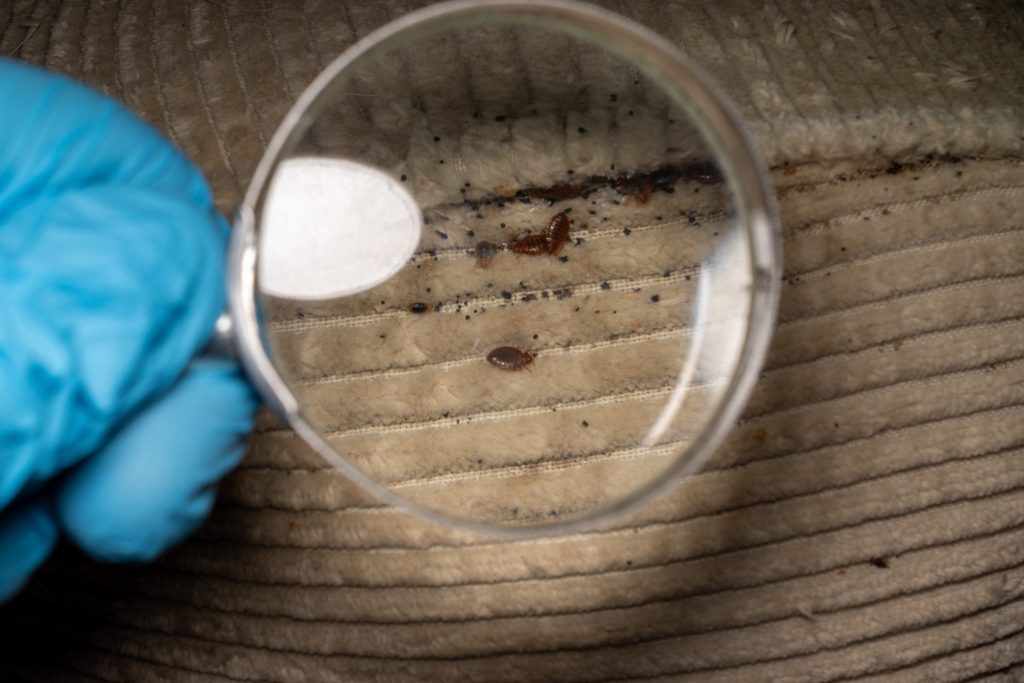
An unfed bed bug has a long, flat, oval body that appears brown in color. After feeding, its body becomes balloon-like and elongated, shifting to a reddish-brown tone. According to the EPA, this color and shape change is one of the clearest ways to confirm what you are looking at. Nymphs start out creamy white and darken as they grow into adults, making younger bed bugs harder to notice against light-colored bedding.
How to Spot Bed Bug Activity Inside Your Home
Because bed bugs stay hidden during the day, the signs they leave behind are often your first clue. Look for reddish stains and tiny dark spots on your bed sheets. These marks can also appear on box springs, furniture, and personal belongings. A flashlight and a slow, careful look along mattress seams will help.
As Purdue Extension notes, you may find bed bugs in various growing stages, from egg to adult, along with shed skins, fecal spots, and bloodstains in their hiding areas. Bed bugs also produce a musty-sweetish odor from glands on the lower part of their body, which can become noticeable in heavier infestations.
Where Bed Bug Activity Shows Up Around Homes
Bed bugs gravitate toward areas where you sleep or rest. Common hiding spots include mattress seams, box springs, headboards, bed frames, and side tables. You may also find signs along baseboards, wall crevices, and behind picture frames or electrical outlets. Their flat body shape lets them squeeze into surprisingly narrow gaps.
Exterior Entry Points Bed Bugs Use
Bed bugs typically arrive inside your home by hitchhiking on personal belongings rather than entering from the yard. Luggage, secondhand furniture, and clothing are common carriers. Once inside, their small size and flat body allow them to spread quickly between rooms by slipping through cracks and crevices that are easy to overlook.
Why Bed Bug Problems Develop
Bed bug problems rarely announce themselves right away. These insects are small, flat, and built to tuck into tight spaces where they go unnoticed for weeks. Understanding where they hide, what draws them in, and how they spread through a home helps you catch activity before it grows.
Outdoor Nesting Areas for Bed Bugs
Bed bugs are primarily indoor pests, but look-alike species can cause confusion. According to Kansas State University Extension, the adult swallow bug looks similar to bed bugs and bat bugs and is nearly impossible to distinguish with the naked eye. Determining the species matters because control methods differ for each.
Food and Shelter That Attract Bed Bugs
Bed bugs feed on human blood and usually bite when people are sleeping. They are drawn to warmth and the CO2 you exhale while resting. Their presence is not a sign of poor hygiene. They can be found in high-end hotels as well as budget accommodations.
Clutter gives bed bugs more places to hide. Reducing clutter removes harborage spots and makes it easier to notice activity early.
How can you see bed bugs with the naked Move Around Homes
Bed bugs are wingless, so they move by crawling. They travel between beds and nearby furniture, typically staying close to where people sleep. Roughly 80% of bed bugs can be found within three to five feet of your bed’s headboard. Because they feed at night and some people have no reaction to bites, an infestation may go unnoticed for some time.
Travel is one of the most common ways bed bugs reach a new home. If you travel frequently, check behind headboards, under sheets, and along mattress seams and tufts in your hotel room, especially if you have been bitten.
Trails and Entry Points Bed Bugs Use
Bed bugs use cracks and crevices throughout a room as pathways and hiding spots. Caulking and sealing these openings can help limit movement. According to Purdue Extension, bed bug traps placed near beds or furniture can intercept bugs moving to and from those areas.
Risks From Bed Bugs
Knowing whether you can spot bed bugs matters because the risks they pose go beyond a nuisance. Even when these pests are hard to detect, the problems they create can affect your comfort, your sleep, and your living space in ways that add up quickly.
Health Risks Linked to Bed Bugs
Bed bugs are blood-feeding pests that target humans and other animals. According to Oregon State University Solve Pest Problems, they cause itching, skin irritation, and embarrassment. Reactions to bites vary from person to person, and most individuals may not be aware of bites until symptoms develop.
The emotional toll is worth noting too. Dealing with these pests can cause stress and lost sleep, especially when you are unsure whether the problem is growing. A blood meal is required between each molt as nymphs develop, so feeding activity continues throughout the life cycle.
Property Damage From Bed Bugs
Bed bugs do not destroy structural materials, but they leave visible evidence on your belongings. Fecal spots, blood spots, shed skins, and empty egg cases can accumulate on mattresses, box springs, and furniture over time. These stains can be difficult to remove from fabric and upholstery. Because eggs are covered in a glue-like substance, signs of an infestation can appear across personal belongings, furniture seams, and cracks near sleeping areas.
Food Areas and Bed Bug Activity
Bed bugs are not drawn to food preparation areas the way some other pests are. Their activity centers on places where people sleep or rest rather than kitchens or pantries, so finding them requires checking bedrooms and living areas first.
When to Look Closer at Bed Bug Activity
If you notice unexplained itching or small marks on your skin, it is worth inspecting your bed and nearby furniture. According to UC IPM, you can confirm a bed bug infestation only by detecting the pests themselves or their signs, which include fecal spots, blood spots, egg cases, and shed skins. Empty egg cases may remain long after nymphs have emerged, so even old signs point to activity that deserves attention.
Professional Pest Control for Bed Bugs
Even when you can spot bed bugs yourself, getting rid of an infestation takes more than sharp eyes. Knowing what to look for is the first step, but a thorough professional approach is what actually resolves the problem. Here is how prevention, inspection, and treatment work together.
How to Reduce Attractants for can you see bed bugs with the naked
Mattress and box spring encasements are one of the most practical steps you can take. According to Purdue Extension, encasements keep bed bugs from entering the mattress, remove hiding places, and make future inspections and treatments much easier. Your pest management professional can recommend which encasements work best for your situation.
However, as Oregon State University Solve Pest Problems notes, nonchemical steps alone will not remove an infestation. They should be used alongside professional treatment for the best results.
Why Bed Bug Control Starts With Inspection
Before any treatment begins, a careful inspection confirms the scope of the problem. Check your mattresses, box springs, and headboard for bed bugs as well as fecal or blood spots. These signs help determine whether bed bugs are present and where they are concentrated.
At Sage Pest Control, the process starts with a phone consultation or inspection with one of our state-certified inspectors. Our team can often help identify potential bed bug activity based on photos, bite patterns, or symptoms. If bed bugs are suspected, a technician performs a detailed inspection of beds, mattresses, box springs, bed frames, headboards, side tables, furniture seams, baseboards, wall hangings, electrical outlets, and nearby upholstered furniture.
What to Expect During Professional Bed Bug Treatment
Professional pest control companies have special skills and tools to address bed bug infestations. At Sage, treatment begins at the farthest point in the room and works back toward the exit to avoid recontaminating treated areas.
Treatments may include a combination of liquids, sprays, and dusts. High-temperature steam may be used on mattresses, furniture seams, cushions, and cracks where liquid products may not reach. A dust product may also be applied inside bed frames, box springs, and other voids to create a long-lasting barrier.
Mattress and box spring encasements are designed to permanently seal bed bugs inside, addressing any that may have avoided other control measures. Every initial service includes a complimentary two-week follow-up to reinforce treatment.
What to Expect From a Bed Bug Control Plan
Before treatment, you will receive a preparation sheet with steps to complete. These include laundering sheets and blankets in a hot wash and hot dry cycle, removing loose items from dressers and nightstands, and taking pictures and wall hangings down. All occupants and pets must leave the structure for a minimum of three hours while products dry.
Sage Pest Control bed bug treatments are priced at $300 per bedroom, plus an additional $300 for the rest of the home. Our treatments include a 90-day unlimited warranty starting from the date of initial treatment. If you continue to see bed bug activity during the warranty period, we will return and re-treat the affected areas at no additional cost, provided all preparation instructions were completed and the technician had full access to all areas requiring service.
Can You See Bed Bugs With The Naked Eye: Bottom Line
Yes, adult bed bugs are visible without magnification, though their small size and habit of hiding in tight spaces make them easy to overlook. Nymphs and eggs are harder to spot, so looking for secondary signs like fecal spots and blood stains on your bedding can help confirm activity. Reducing clutter, inspecting your mattress and box spring regularly, and sealing cracks where bed bugs hide are all practical steps you can take.
When an infestation is present, a professional inspection gives you the clearest picture of what you’re dealing with and the best path forward. If you suspect bed bugs in your home, reach out to Sage Pest Control for a consultation and same-day service.
Frequently Asked Questions
What Signs Should I Look for Besides Live Bed Bugs?
Check your mattress seams, box spring, and headboard for small fecal spots, blood stains, and shed skins. A flashlight helps when inspecting dark crevices and folds in bedding or furniture.
Do Bed Bug Bites Always Show Up?
Not always. Some people have no visible reaction and may not realize an infestation is present. When bites do appear, they often show as red welts that can itch for several days. Because reactions vary, relying on bites alone is not the most reliable way to confirm bed bugs.
Can I Handle a Bed Bug Problem on My Own?
Reducing clutter, caulking cracks, and using traps can help limit activity. However, professional pest control companies have specialized tools and training to perform thorough inspections and targeted treatments that address the full scope of an infestation.
What Does Sage Pest Control’s Bed Bug Treatment Include?
Sage’s process starts with a consultation and detailed inspection by a state-certified inspector. Treatment covers common hiding areas using a combination of liquids, dusts, and steam. It includes a complimentary two-week follow-up and is backed by a 90-day unlimited warranty.
