
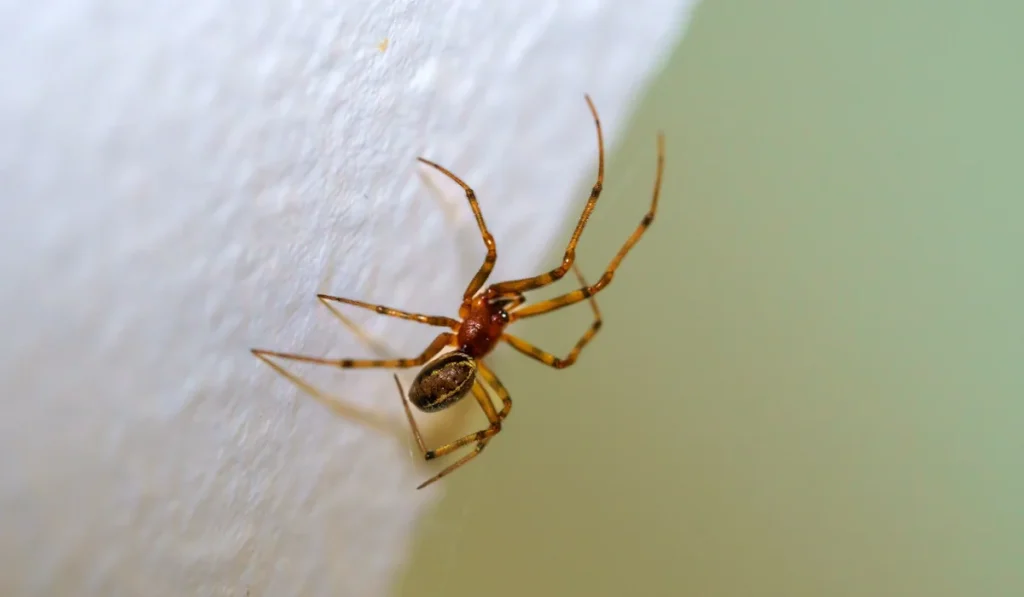
A spider crossing the basement floor or building a web beside the porch can leave you wondering what kind it is and whether you should be concerned. Virginia spiders include many harmless predators as well as black widows and brown recluses, the two spider groups of primary medical concern in North America. This guide explains which spiders homeowners commonly encounter, which species deserve extra caution, why spiders move indoors, and what repeated spider activity can tell you about conditions around your home.
Which Virginia Spiders Do Homeowners See Most Often?
Virginia is home to far more spiders than most homeowners will ever identify. Virginia Tech’s overview of spiders in Virginia notes that estimates vary, but several hundred species may occur across the state. Most live outdoors and spend their time hunting insects or building webs away from people.
Around homes, a smaller group gets most of the attention. Many of the common spiders found in Virginia homes and yards are brown, gray, or mottled, which is one reason color alone is a poor identification method.
| Spider Group | What Homeowners May Notice | Common Locations |
| Common house spiders | Small spiders with irregular, tangled webs | Corners, windows, basements, and storage areas |
| Wolf spiders | Large, hairy spiders that hunt without capture webs | Ground level, garages, basements, doors, and windows |
| Jumping spiders | Compact, active spiders with noticeable eyes | Plants, walls, and outdoor surfaces |
| Orb weavers | Spiders associated with round, structured webs | Gardens, shrubs, and vegetation |
| Nursery web spiders | Large brown spiders that hunt rather than use capture webs | Gardens, tall grass, vegetation, and occasionally houses |
House Spiders
Common house spiders often build irregular webs in quiet areas where small insects pass through. Corners near windows, doors, vents, basements, garages, and storage areas can all provide useful web sites when prey is available.
The way common house spiders use corners for web building also helps explain why homeowners may see webs repeatedly in the same places. Corners provide attachment points and tend to receive less disturbance than open areas. If a web keeps returning, it is worth checking nearby gaps and insect activity rather than removing the web and assuming the issue is solved.
Wolf Spiders
Wolf spiders look different from the web-building spiders many homeowners expect to find indoors. They are active, ground-dwelling hunters that chase or ambush prey instead of waiting for insects to become trapped in a web.
Their brown coloring and larger size can also cause unnecessary concern. Virginia Cooperative Extension identifies wolf spiders as one of several groups that may be mistaken for brown recluses. Understanding Virginia wolf spider identification and behavior can make it easier to distinguish these common hunters from less frequently encountered recluse spiders.
Jumping Spiders, Nursery Web Spiders, And Orb Weavers
Jumping spiders are active hunters often found on plants, walls, and other outdoor surfaces. Nursery web spiders are larger brown spiders associated with gardens and vegetation. Because both move around rather than remaining in a web, they can be especially noticeable when they wander close to a house.
Orb weavers are easier to recognize by what they build. Their structured, circular webs commonly appear between shrubs, plants, and other outdoor supports. Finding one of these webs outdoors is different from repeatedly finding spiders in bedrooms, closets, or other indoor living areas.
Are Virginia Spiders Dangerous?
Most spider species are not considered dangerous to people. Virginia Tech identifies widow spiders and recluse spiders as the two groups of primary medical concern in North America.
That does not mean every black spider is a widow or every brown spider is a recluse. Reliable identification depends on body features, markings, behavior, and sometimes magnification rather than color alone.
What Should You Know About Black Widows?
Both northern and southern black widows occur in Virginia. Adult females are shiny black with red markings on the underside of the abdomen. Southern black widows typically have a connected hourglass marking, while northern black widows often have a divided marking.
Black widows favor sheltered locations where they are less likely to be disturbed. Around homes, that can include woodpiles, sheds, garages, stored materials, and other protected spaces.
Homeowners who are unsure what they have found can compare those characteristics with the identifying features of black widows in Virginia. Wearing gloves when moving firewood, stored boxes, or outdoor materials can also reduce the chance of accidentally pressing a hidden spider against your skin.
Are Brown Recluse Spiders Common In Virginia?
Brown recluse spiders occur in Virginia, but their distribution is frequently misunderstood. Virginia Tech’s brown recluse spider guidance states that the species’ natural range reaches only the very tip of southwestern Virginia. Isolated populations have also been confirmed elsewhere in the state, likely after spiders or egg sacs were transported with household goods or firewood.
That distinction matters for Virginia Beach homeowners because the area lies outside the species’ natural range described by Virginia Tech. A brown spider found in Hampton Roads should not automatically be identified as a brown recluse.
Brown recluses have six eyes arranged in three pairs, although magnification is needed to use eye arrangement for identification. Their legs also lack stripes or bands. Wolf spiders, nursery web spiders, and funnel weavers are among the spiders commonly confused with them.
What Should You Do If You Think A Spider Bit You?
A skin mark alone does not reliably identify a spider bite. Virginia Cooperative Extension notes that suspected spider bites may have other causes, including other arthropod bites, infections, and skin conditions.
If you believe a black widow or brown recluse has bitten you, seek appropriate medical care. If the spider can be retained safely for identification, avoid handling it with bare hands. Identifying the spider itself provides more useful information than trying to determine the species from a skin lesion.
Why Am I Seeing Spiders In My Virginia Home?
Spiders need prey and a suitable place to hunt or build a web. When they keep appearing indoors, it helps to examine the conditions around the home rather than treating every sighting as an isolated event.
Small openings around doors, windows, utility penetrations, siding, and other exterior gaps can allow spiders and the insects they eat to enter. Garages, basements, attics, crawlspaces, closets, and storage areas can then provide protected spaces with relatively little disturbance.
Prey availability matters too. Spiders feed on insects and other small arthropods, so locations with regular insect traffic may become productive hunting areas. A web beside a window, for example, may be positioned there because small insects frequently pass through or gather nearby.
This does not mean one spider proves that another pest problem exists. A single wandering wolf spider and recurring webs in several rooms are different situations. Frequency, location, available prey, and entry points provide more useful clues than one isolated sighting.
When Are Spiders Most Noticeable In Virginia?
There is no single spider season that applies to every Virginia species. Different spiders mature, reproduce, hunt, and build webs at different times of year.
Orb-weaving spiders become especially noticeable in late summer and early fall as mature spiders build larger, more visible webs in vegetation. Their webs may suddenly seem more common across walkways, between shrubs, or near porch areas even though spiders have been present outdoors throughout the warmer months.
Wolf spiders can create a different seasonal pattern. Virginia Cooperative Extension notes that they are commonly found indoors during fall, when some enter buildings while looking for warmer shelter.
Neither pattern automatically means a home has an infestation. A large orb web outdoors may simply reflect seasonal maturity, while one wolf spider may have wandered through an opening. Repeated indoor activity provides a stronger reason to inspect the home for gaps, shelter, and prey.
How Can Virginia Homeowners Keep Spiders Out?
Spider prevention works best when you reduce access and hiding places rather than relying only on removing the spiders you can see.
Start at the exterior. Check screens and weather stripping around doors and windows, and seal accessible cracks or gaps around foundations, pipes, and utility penetrations. These steps can reduce entry opportunities for spiders as well as the insects they hunt.
Inside, concentrate on places that stay undisturbed for long periods:
- Clear unnecessary clutter from garages, basements, attics, closets, and storage rooms.
- Vacuum webs and hidden areas behind furniture or stored items.
- Keep firewood and other stored outdoor materials away from the house when practical.
- Wear gloves when handling firewood, old boxes, stored papers, or other items that have sat untouched.
- Shake out shoes, gloves, clothing, and gardening supplies that have been stored in sheds or garages.
Reducing insect activity can also make indoor spaces less attractive to spiders. Torn screens, gaps around doors, and areas where insects routinely gather can provide spiders with a steady source of prey.
| What You Notice | What To Check |
| Webs returning near windows | Screens, gaps, and nearby insect activity |
| Spiders in garages or basements | Clutter, stored materials, and entry points |
| Outdoor webs near lights | Flying insects gathering around exterior lighting |
| Spiders around firewood or storage | Sheltered, undisturbed materials |
| Repeated indoor sightings | Multiple entry points, hiding areas, and prey insects |
The goal is not to remove every spider from the property. Outdoor spiders are part of Virginia’s environment and help capture insects. Prevention becomes more useful when spiders repeatedly enter living areas or build webs where they create an ongoing nuisance.
When Spider Activity Around Your Virginia Beach Home Keeps Returning
A spider in the garden or a single web outside rarely tells you much on its own. Recurring indoor sightings, webs that continually return in several areas, egg sacs in protected locations, or a suspected black widow provide stronger reasons to examine what is supporting the activity.
Spider control is included in the standard pest control coverage offered by Sage Pest Control. Technicians inspect foundations, crawlspaces, attics, basements, garages, baseboards, and other areas where spiders and prey insects may be active. Accessible webs can be removed, while treatments focus on active areas and the exterior perimeter.
Sage’s service guarantee also covers eligible spider activity that continues between scheduled visits, with inspection and re-treatment provided as needed. The company’s contact information and local service options are available for Virginia Beach homeowners who need to report continued activity or coordinate an existing service visit.
For Virginia Beach homeowners, effective spider management comes down to understanding what you are seeing, reducing the conditions that support repeated activity, and addressing access points and prey when spiders keep returning indoors.
